Shop Floor Automation for Footwear Manufacturing

Intelligent Production Planning That Maximizes Machine Utilization and Eliminates Packaging Bottlenecks

Overview

Footwear manufacturing involves complex shop floor operations—multiple plants, high-capacity machines, frequent mold and color changes, and strict packaging requirements. Managing all of this manually often leads to idle machines, production delays, and inefficient use of space.

To address these challenges, we designed a cloud-based Shop Floor Automation (SFA) platform that intelligently plans and schedules footwear production across multiple factories in India. The system ensures higher machine utilization, fewer stoppages, and smoother end-to-end production flow.
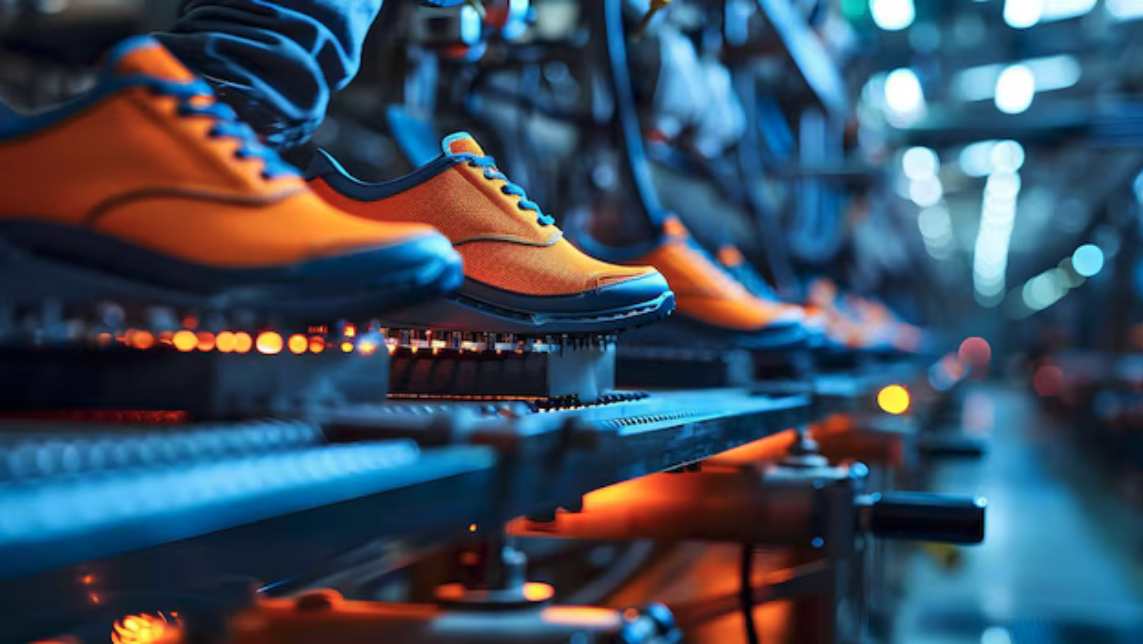
Footwear Manufacturing Shop Floor

The Challenge

Machine & Mold Complexity

  • Each machine contains 30 to 120 arms
  • In every rotation, one pair of arms produces one pair of footwear
  • Changing molds or colors causes machines to rotate without producing output

Production Loss During Changeovers

  • Mold changes result in multiple idle rotations
  • Color changes cause at least 10 non-productive rotations
  • Frequent changes significantly reduce daily output

Compatibility Constraints

  • Some footwear requires stitching, which needs stitching-enabled molds
  • RFID-enabled machines must use RFID-enabled molds
  • Incorrect combinations lead to production failures

Packaging Dependency (Critical Bottleneck)

Eg: Each finished carton must contain specific size assortments (this varies by order):

  • Standard: Size 5 (10 pairs), Size 6 (20 pairs), Size 7 (20 pairs)
  • Custom: "2 * 3 * 4 of 10, 15, 25" or "8 * 9 * 10 with 10 each"

All required sizes must be produced together. If even one size is missing:

  • Boxes cannot be closed
  • Finished goods block floor space
  • Plant efficiency drops

The Solution

We built a smart, cloud-based SFA platform that automatically maps demand to the right machines while considering all production constraints.

Key Capabilities

Intelligent Production Planning

  • Converts customer demand into optimized production plans
  • Assigns the right machine, mold, size, and color automatically
  • Prioritizes urgent orders without disrupting ongoing production

Packaging-Aware Scheduling

  • Plans production by complete boxes, not individual sizes
  • Ensures all required sizes in an assortment are produced in parallel
  • Eliminates half-filled boxes and floor congestion

Reduced Downtime

  • Groups production runs to minimize mold and color changes
  • Avoids unnecessary idle rotations
  • Improves overall machine utilization

Built-in Compatibility Checks

  • Automatically enforces RFID and stitching requirements
  • Prevents incorrect mold or machine assignments
  • Reduces shop floor errors

Real-Time Adaptability

Instantly adjusts schedules when:

  • Priority orders arrive
  • Machines go offline
  • Molds become unavailable

Only affected machines are rescheduled—no full-plant disruption

Technology Stack

Backend

Python, Django

Frontend

HTML, CSS, jQuery

Database

MySQL

Version Control

Git

Deployment

Cloud-based, multi-plant access

Business Impact

Measurable Results

Higher Machine Utilization

Significant reduction in idle time

Faster Order Fulfillment

Optimized production scheduling

Zero Packaging Bottlenecks

Complete box planning eliminates delays

Better Space Utilization

No half-filled boxes blocking floor space

Operational Benefits

  • Less manual planning
  • More predictable production
  • Improved coordination between production and packing
  • Scalable across multiple factories

Why This Matters

This SFA system transforms footwear production from reactive manual scheduling to data-driven, automated planning. By considering real-world shop floor constraints—machines, molds, colors, RFID, stitching, and packaging—the platform delivers consistent output, reduced waste, and smoother operations.

Conclusion

The Shop Floor Automation platform enables footwear manufacturers to:

  • Produce more with the same machines
  • Reduce downtime and inefficiencies
  • Maintain packaging discipline
  • Respond faster to changing market demands

It is a practical, scalable solution built for the realities of high-volume footwear manufacturing.

Related Case Studies