The Quiet Revolution: AI for Local Food Businesses
Step onto any busy street corner, and you'll find the heart of the local economy: the food cart. For decades, these businesses have run on instinct, experience, and the sweat of their owners. But today, a quiet revolution is happening. By leveraging AI for local food businesses, street vendors are transforming their operations without losing the human touch that makes them special.
Artificial Intelligence isn't just for tech giants. It's a tool that can help a small food business predict demand, manage waste, and serve customers faster. Here is the journey of how one local cart evolved through seven distinct phases.
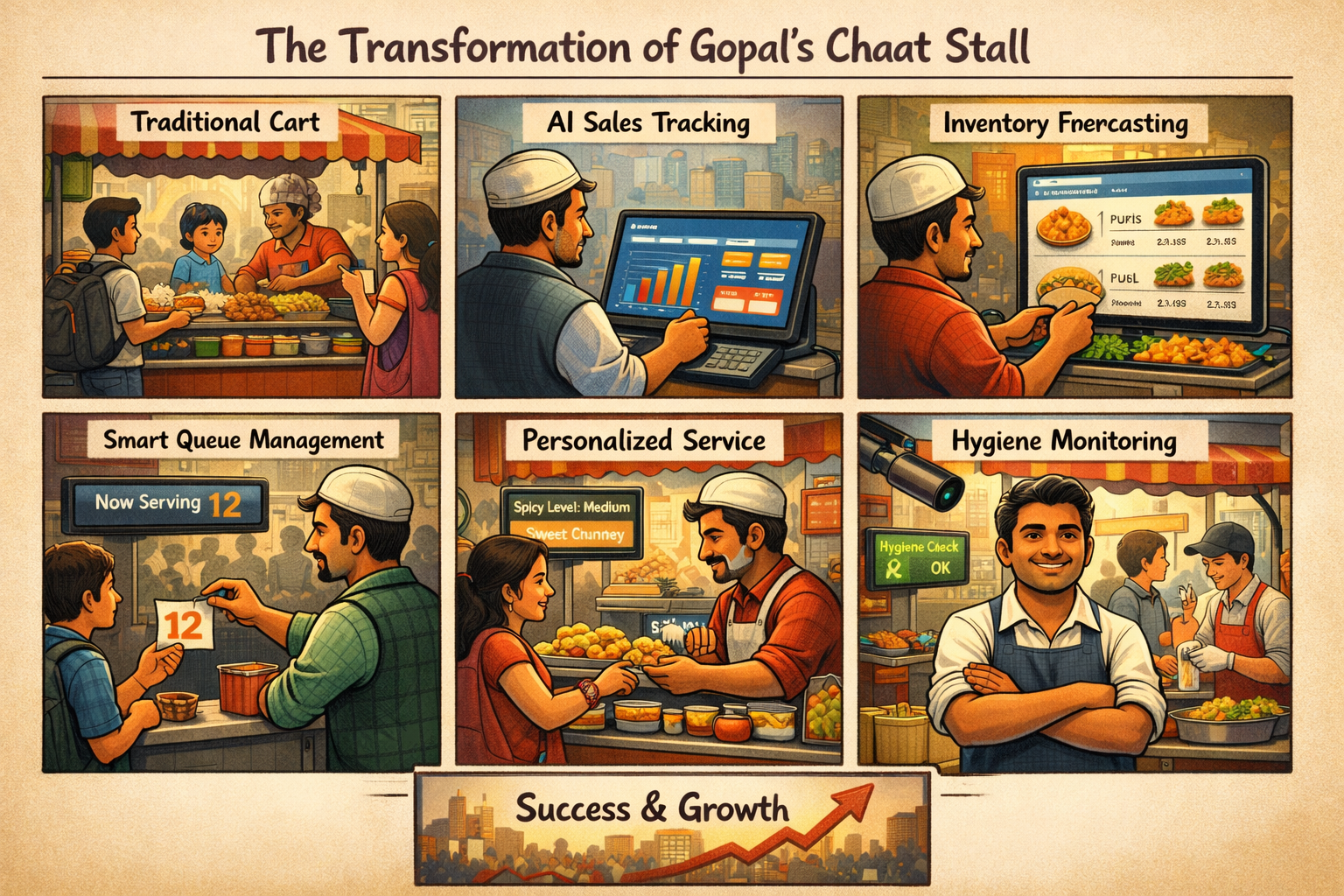
Phase 1: The Traditional Food Cart
What’s happening: A busy local food cart running on experience and instinct. Sales are steady, but decisions are reactive. No data, no predictability. Inventory is bought based on "feeling," and peak hours often lead to chaos.


Phase 2: Sales Become Visible
What’s happening: A simple digital system starts tracking daily sales. AI begins identifying peak hours, popular items, and slow days. Instead of guessing, the owner now knows exactly which 2-hour window brings in 40% of the revenue.


Phase 3: Inventory Gets Smarter
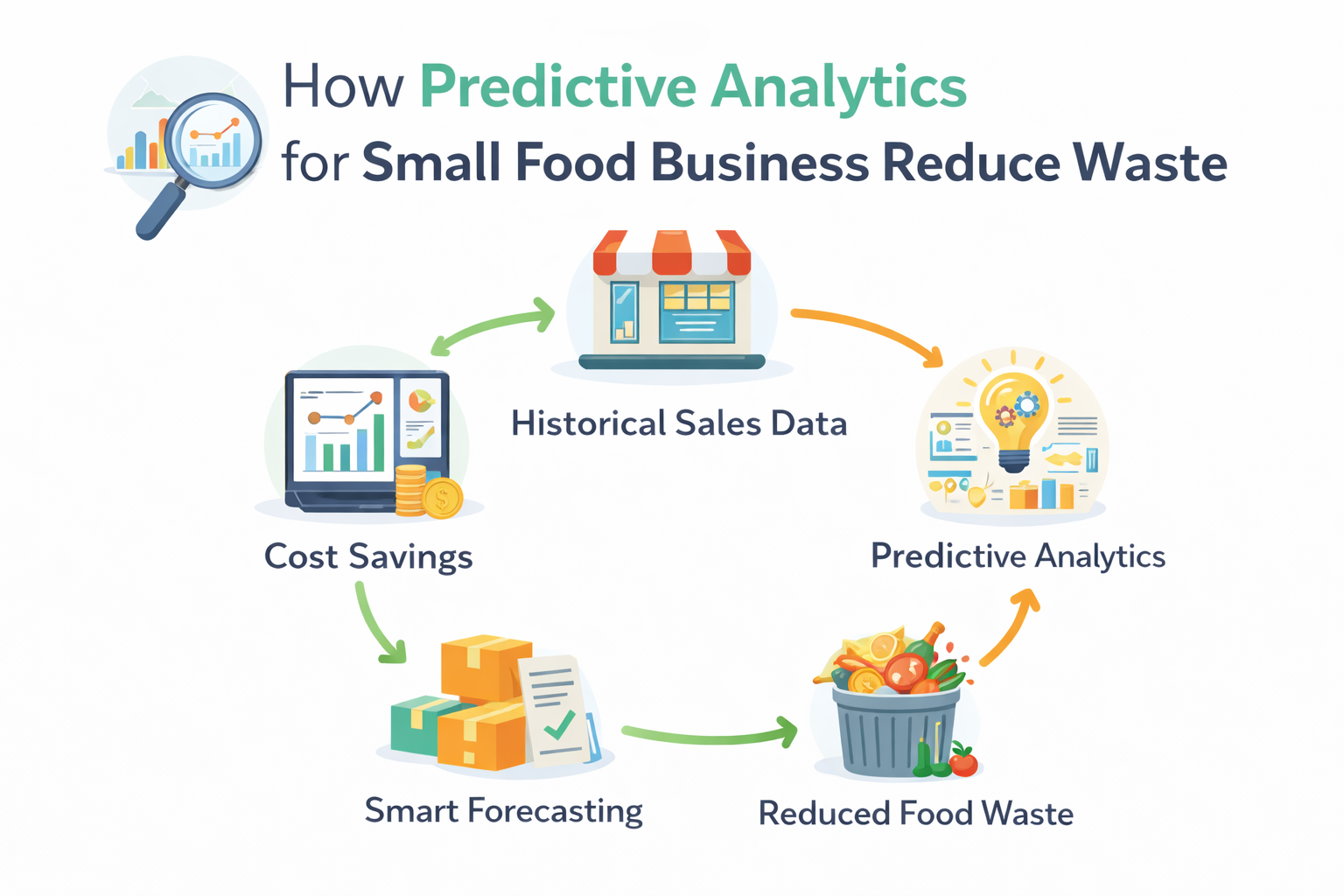
What’s happening: AI predicts how much to prepare each day by analyzing past sales, weather patterns, and local events. This is where AI for local food businesses truly shines: less waste, fewer stock-outs, and better cost control. No more over-prepping on a rainy Tuesday.


Phase 4: Order & Queue Flow Improves
What’s happening: Peak-hour chaos reduces. AI-assisted ordering systems optimize the sequence of preparation. Orders move faster, customers wait less, and the service feels organized even when the line is long.


Phase 5: Customers Get Personal Service
What’s happening: Returning customers receive the same taste they like. AI remembers preferences quietly in the background—not through creepy facial recognition, but through simple loyalty links. "The usual, Mr. Chen?" becomes a data-backed reality.


Phase 6: Hygiene & Trust Improve
What’s happening: AI-assisted monitoring ensures hygiene standards are consistently met. Automated checks for temperature and cleanliness give families peace of mind. Families feel safer eating there because the 'smart' cart holds itself to higher standards.


Phase 7: A Smarter Business Emerges
What’s happening: The cart still feels local and human — but now it is data-backed, efficient, and scalable. The owner isn't just a cook; they are a business strategist. The food didn't change, but the business did.


Conclusion: Technology Serving Tradition
AI did not change the food. It changed how the business was run — quietly, steadily, and effectively. For those looking to scale, these tools provide the foundation. For those looking to stay small but profitable, they provide the breathing room to focus on what matters: the craft.
Action Plan for Your Food Business
- Start Small: Adopt a digital POS to start collecting sales data.
- Analyze Trends: Look for your busiest hours and most profitable items.
- Optimize Inventory: Use simple forecasting to reduce daily food waste.
Want to dive deeper into the tech? Read our guide on how predictive analytics reduces food waste and explore 5 ways AI enhances customer service in the street food industry.

Leave a Comment