“We have a website, but there’s no organic traffic.”
This is one of the most common complaints I hear from founders, startups, and even established businesses. You spend months developing a product, weeks designing a brand, and thousands of dollars on a sleek, modern website. You launch with a big announcement on LinkedIn, you tell your friends, you maybe even run a few ads.
And for the first week, the numbers look okay. But then? Silence. The traffic drops to zero using a few direct visits from your team. Your beautiful website becomes a digital ghost town.
The uncomfortable truth? Having a website and earning organic reach are two completely different things. Most websites today are built to look good, not to be discovered. And Google doesn’t reward design—it rewards relevance, structure, and value over time. In this comprehensive guide, we are going to break down exactly why this happens and how to fix it.
1. The Biggest Misconception: “Website = Traffic”
The single biggest reason websites fail is a fundamental misunderstanding of what a website actually is. Ignorance here is not bliss; it is bankruptcy.
The Infrastructure Fallacy
A website is not a traffic engine by default. It is just infrastructure. It is a container for your content. Think of it like opening a shop. If you lease a building in the middle of a desert:
- Building the shop does not equal customers.
- Painting the walls does not equal footfall.
- Launching the site does not equal Google traffic.
Real World Example: The "Invisible" Boutique
Imagine a high-end fashion boutique that opens on a street that isn't on any map. The owner spends $100,000 on marble floors, velvet curtains, and gold signage. But she doesn't tell anyone where it is, and she doesn't put signs on the main road.
A customer types "luxury dresses near me" into their GPS (Google). The GPS has no record of this shop's inventory because the owner labeled her shelves "My Vision" instead of "Evening Gowns." The GPS sends the customer to a much uglier shop down the road because that shop had a clear sign saying "We Sell Evening Gowns."
This is exactly what happens online. You built a marble shop in the desert. Organic reach is the process of building roads to that shop.
Organic reach only happens when your site earns visibility. And that visibility must be earned page by page, keyword by keyword. You cannot buy it with design, and you cannot wish it into existence.
2. Why Most Websites Get Zero Organic Reach
If we audit 100 random business websites, 95 of them will have zero significant organic traffic. Why? Because they violate the core laws of search engines. Let's break down the three main reasons.
2.1 They Don’t Target Search Intent
Walk through your own website right now. What are the main headlines?
"Transforming the Future."
"Our Vision for 2030."
"Synergy and Innovation."
Now ask yourself: Who is searching for that? Nobody. Nobody wakes up at 2 AM and types "Synergy and Innovation" into Google unless they are looking for a Dilbert comic. Users search for their problems. They search for solutions.
Users search for:
- "How to reduce checkout drop-offs"
- "Best CRM for small business"
- "Why my website is not ranking on Google"
If your content doesn’t match what people are searching, Google won’t show it. SEO is not about what you want to say. It’s about what users are actively asking. You need to bridge the gap between "Brand Talk" and "User Search."
2.2 No Keyword Strategy (Just Random Pages)
Many websites are built "page-first" instead of "query-first." You decide you need a "Services" page, so you write one. But you never check if anyone is searching for "Services."
Common Mistakes:
- No primary keyword per page: The page is about everything, so it ranks for nothing.
- Keyword Stuffing: One page trying to rank for 20 unrelated topics.
- Keyword Cannibalization: Multiple pages competing for the same keyword, confusing Google.
- Ignoring long-tail keywords: Ignoring specific, lower-volume queries that have high conversion intent.
2.3 They Publish Once and Stop
This is the silent killer. It follows a predictable, tragic pattern:
- Founder gets excited about SEO.
- Team writes 3 blogs in one week.
- They wait 10 days.
- "Traffic didn't go up. SEO doesn't work."
- They never blog again.
Google rewards consistency, not effort spikes. If your competitors publish weekly and you publish quarterly, the outcome is predictable. SEO is a long-term signal game. You need to prove to Google that you are still in business, still relevant, and still an expert.
"SEO is not a lottery ticket. It is a mortgage. You have to pay into it every month for years before you own the asset."
3. Technical SEO Is Ignored (Until It’s Too Late)
Many “beautiful” websites are technically invisible. Designers love large images, complex animations, and heavy JavaScript frameworks. Google hates all of those things if they are not optimized.
The Technical Accessibility Checklist:
- Indexing: Are your pages actually in Google's index? (Check with
site:yourdomain.com) - Core Web Vitals: Does the site load in under 2.5 seconds?
- Bloated JS: Are you loading 5MB of scripts to render a paragraph of text?
- Schema Markup: Are you telling Google exactly what your content is?
If Google struggles to crawl, understand, or load your site, content quality doesn’t matter. It is like writing a masterpiece novel and then locking it in a safe. Technical SEO is the key to that safe.
4. Content Is Written for Humans... But Not for Search Engines
This sounds counterintuitive. "Isn't Google telling us to write for humans?" Yes, but Google is still a robot. It needs structure to understand context.
Good organic content balances:
1. Human Clarity: Engaging, witty, helpful.
2. Search Engine Structure: Proper H1/H2 hierarchy, internal linking, alt text.
Most blogs fail because they are "Nice to read" but structurally a mess. They lack clear headers, they don't use keywords in the first 100 words, and they don't link to other relevant pages.
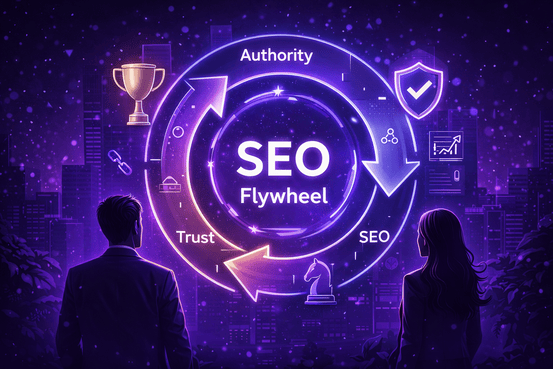
5. No Authority, No Trust, No Rankings
Google doesn’t just rank pages—it ranks sources. If your website has thin content, covers too many unrelated topics (e.g., selling shoes and also giving legal advice), or has no backlinks, Google has no reason to trust it.
Authority is built by:
- Covering a niche deeply (Topical Authority).
- Answering related questions thoroughly.
- Earning references (Backlinks) from other trusted sites.
This is why a small blog with 50 articles about only "Vegan Baking" will outrank the New York Times on a vegan baking query. It has higher topical authority.
6. "Publish and Pray" Is Not a Strategy
Most marketing teams stop at "Publish." They hit the button and hope the world comes to them. They don't.
A Real Strategy Includes Distribution:
- Sharing content consistently on social media.
- Repurposing blogs into LinkedIn threads and tweets.
- Building internal links from older, high-traffic pages to new ones.
- Updating posts based on data (if a post ranks #11, update it to get it to #5).
7. The Hard Truth Most Founders Avoid
Organic reach is not a feature you buy. It’s a system. A system requires:
- Strategy
- Process
- Time
- Discipline
If SEO is treated like "One-time setup" or "Optional marketing," you will fail. If you treat it like a core business function—like product development or sales—you will win. The result of a good system is traffic, leads, and growth. The result of a bad system is silence.
Conclusion: What Actually Works?
If you want organic reach, you need to think like this:
- Start with problems, not pages.
- Build topical authority, not random blogs.
- Fix technical SEO first, not last.
- Publish consistently, not occasionally.
- Measure, update, and improve content monthly.
SEO success looks boring on the surface. It is the daily discipline of being helpful. But unlike ads, which stop working the moment you stop paying, organic reach compounds. It builds an asset that pays you dividends for years. Stop building a ghost town. Start building a destination.



Leave a Comment