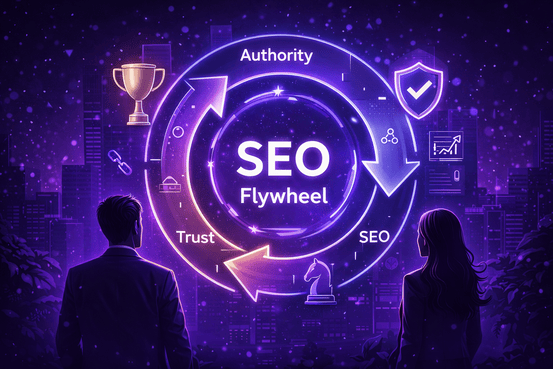
Once you have the content (Search Intent) and the foundation (Technical SEO), you need the fuel. That fuel is Authority.
Google doesn't just rank pages—it ranks sources. It asks: "Is this website a trusted expert on this topic?" If your website has thin content, covers too many unrelated topics, or has no history of being referenced by others, Google has no reason to trust you.
1. What is Topical Authority?
Topical authority is a measure of your site's perceived expertise on a specific subject. In the old days of SEO, you could write one article about "Car Insurance" and rank. Today, that is impossible. You are competing with sites that have 5,000 articles about car insurance.
Depth beats Width. If you spend three years writing only about "Organic Reach Strategy" and "SEO for SaaS," Google will eventually see you as a more trusted source on SEO than a massive news site like CNN that writes just one article about it. This is how small Davids beat the Goliaths.
Actionable Strategy:
Don't be a "Generalist." Be a "Specialist." Narrow your focus. Instead of "Marketing Blog," start a "B2B Email Marketing for Dentists Blog." Own that tiny niche completely, then expand outward.
2. The SEO Flywheel: Consistency over Effort Spikes
Most people treat SEO like a sprint. They run hard for a month and then collapse. But SEO is a flywheel. It is heavy and hard to push at the start. You push and push and it barely moves. But once it starts spinning, its own momentum carries it forward.
The Flywheel Cycle
1. Publish: Create high-quality, query-focused content.
⬇️
2. Link: Build internal links. New posts link to old posts. Old posts get updated to link to new posts.
⬇️
3. Distribute: Share on social, newsletter, communities. Get eyeballs.
⬇️
4. Earn Authority: Traffic leads to backlinks. Backlinks lead to higher Domain Authority.
⬇️
5. Compound: Higher Authority makes it easier for the NEXT post to rank. Go back to Step 1.
Why "Publish and Pray" Fails: It ignores the cycle. It stops at step 1. Organic reach works when you feed the flywheel every single week.
3. Authority is Built, Not Bought (Backlinks)
A "Backlink" is when another website links to yours. To Google, this is a vote of confidence. It is a citation. The more votes you have from high-authority voters (like universities, major newspapers, or industry leaders), the more Google trusts you.
How to earn backlinks naturally?
- Create "Link Bait": Publish original data, studies, or infographics that others want to cite.
- Guest Posting: Write high-quality articles for other blogs in your niche.
- Broken Link Building: Find broken links on other sites and suggest your article as a replacement.
4. Distribution: The "Missing Half" of SEO
Most content marketing teams spend 90% of their time writing and 10% distributing. It should be 50/50.
The Distribution Checklist:
- Social Repurposing: Turn every blog implementation H2 header into a LinkedIn post or Twitter thread.
- Newsletter: Send the article to your list with a personal note.
- Internal Linking: Go to your 5 most popular existing pages and add a link to your new post "Learn more about [Topic] here."
- Communities: Share it in relevant Reddit, Slack, or Discord groups (but only if it adds genuine value, don't spam).
5. The Hard Truth: System vs Feature
Organic reach is not a feature you enable in your settings. It is a system you commit to. A system requires:
- Strategy: Knowing who you are writing for (Intent).
- Process: A calendar that forces you to publish weekly.
- Time: Accepting it takes 6-12 months to see major results.
- Discipline: Doing it even when you don't feel like it.
Final Thought: The Boring Path to Victory
Building an organic engine looks boring from the outside. It is spreadsheets, keyword research, writing, and editing. It isn't flashy like a Super Bowl ad.
But the results? They are magical. An ad campaign stops working the second you stop paying. A successful SEO system builds an asset that pays you dividends for years. You can go on vacation for a month, and your traffic will grow while you are gone.
Most websites don't fail because SEO is hard. They fail because SEO was never truly implemented. A website without an organic strategy is just a digital visiting card. Turn yours into a traffic engine today. Start with problems, build authority, fix your tech, and never stop pushing the flywheel.



Leave a Comment